

9 insights from mobile disrupt 2026: where the global trade-in and refurbished device market is heading
Every year, Mobile Disrupt brings together the world’s leading smartphone manufacturers, mobile network operators, trade-in providers, refurbishment specialists, and reverse logistics companies. As one of the industry’s premier global events, it sets the agenda for the future of device circularity and helps shape the standards that define the recommerce ecosystem. This year’s conference made one thing clear:…

Every year, Mobile Disrupt brings together the world’s leading smartphone manufacturers, mobile network operators, trade-in providers, refurbishment specialists, and reverse logistics companies. As one of the industry’s premier global events, it sets the agenda for the future of device circularity and helps shape the standards that define the recommerce ecosystem.
This year’s conference made one thing clear: the industry has moved beyond rapid growth and entered a new phase of technological maturity. The conversation is no longer about scaling volumes alone — it’s about digital transformation, AI-powered automation, advanced grading technologies, and evolving regulatory frameworks that are reshaping the future of the business.
Breezy CEO Andrii Kosar attended Mobile Disrupt 2026 and took part in discussions on one of the event’s most important technology topics: the implementation of Digital Product Passport (DPP) for electronic devices.
Here are the key takeaways from the conference, our perspective on where the market is headed, and how many of these global trends are already being put into practice through Breezy’s technology and operations.
1. Market Trends
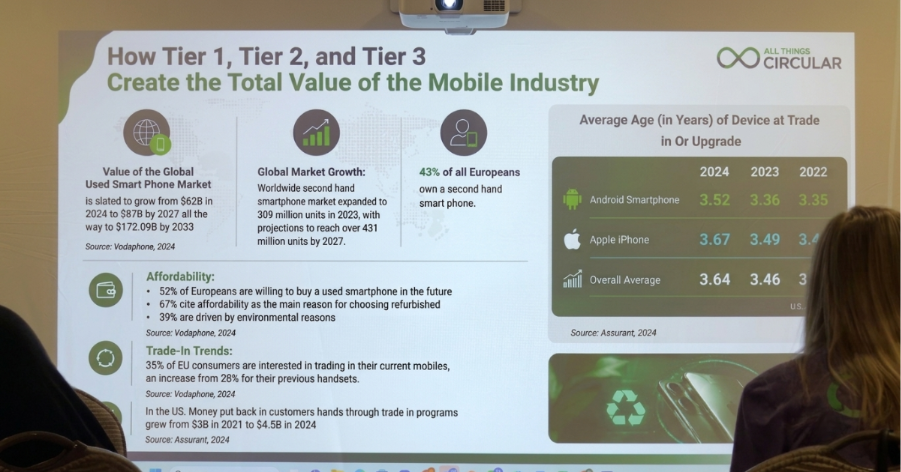
According to Rich Bulger, co-founder of All Things Circular and a leading expert in reverse logistics and the circular economy, the global market for pre-owned smartphones continues to grow steadily. The data below comes from All Things Circular, a research and education platform founded by industry experts with extensive hands-on experience in building circular business models.
– The global used smartphone market is projected to grow from $62 billion in 2024 to $87 billion by 2027, reaching $172.1 billion by 2033.
– Annual shipments of pre-owned smartphones are expected to increase from 309 million units in 2023 to more than 431 million units by 2027.
– 43% of Europeans already use a pre-owned smartphone.
– 52% of European consumers are open to purchasing a pre-owned smartphone in the future. Among them, 67% cite affordability as the primary driver, while 39% are motivated by sustainability considerations.
– Interest in trade-in programs continues to grow: 35% of European consumers are willing to trade in their current smartphone, up from 28% previously.
– The average age of devices traded in has reached 3.64 years (3.67 years for iPhones and 3.52 years for Android devices), reflecting a longer device replacement cycle and increasing consumer confidence in extending device lifespans.
2. A new consumer mindset: everyone is looking to save — even affluent buyers
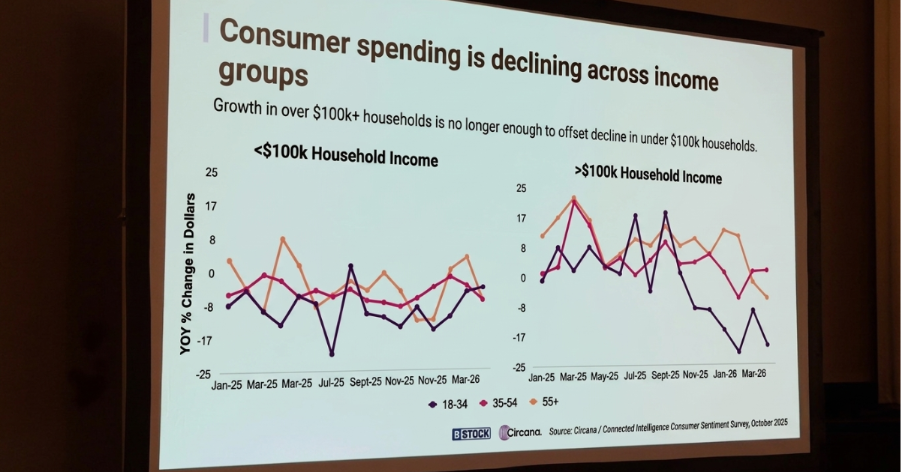
One of the strongest themes at this year’s conference was the fundamental shift in consumer behavior. According to B-Stock, inflation and ongoing economic uncertainty are reshaping purchasing decisions across every income segment.
1. Consumer spending is declining.
Households earning under $100,000 annually have reduced spending on new consumer electronics by 5–10%.
2. Affluent consumers are embracing the secondary market.
Surprisingly, 25–30% of pre-owned smartphone buyers now come from the highest income brackets, proving that value—not just price—is driving purchasing decisions.
3. Younger consumers are becoming more price-conscious.
Even among higher-income Millennials and Gen Z, spending on flagship smartphones has dropped significantly as disposable income comes under increasing pressure.
As a result, buying a professionally refurbished device or trading in an existing smartphone is no longer viewed as a compromise. Instead, it has become a smart, financially sound choice for both mainstream and premium consumers who expect flagship-quality technology while maximizing value.
3. Supply crunch: the new challenge for the secondary market
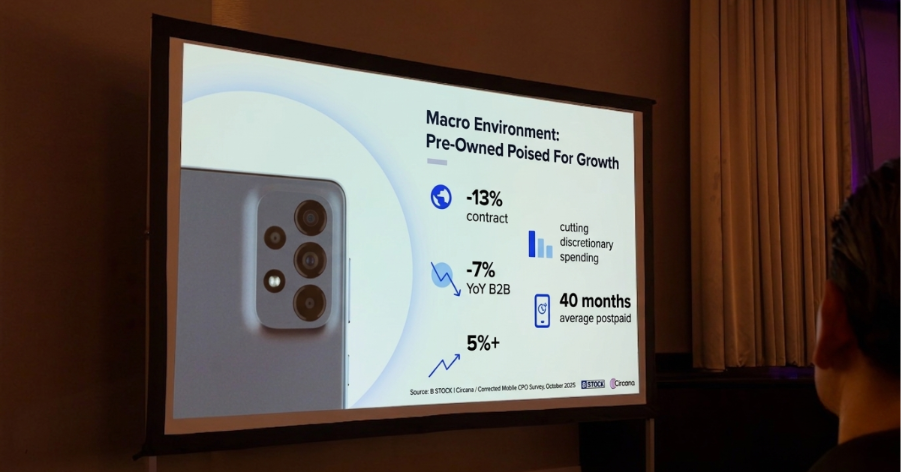
According to B-Stock analysts and industry leaders, the biggest constraint facing the global secondary market today isn’t demand—it’s supply. The availability of high-quality used devices continues to tighten, driven by several long-term market shifts:
Longer upgrade cycles
In the U.S., the average smartphone replacement cycle has reached an all-time high of approximately 40 months, as consumers are holding onto their devices longer than ever before.
The hidden cost of upgrading
Purchasing a new flagship device priced at $1,200–$1,400 often comes with additional expenses, including sales tax (up to $120–130) and carrier activation fees. For many consumers, these extra costs are enough to delay an upgrade.
Carriers are reallocating investment
U.S. mobile operators are reducing subsidies for trade-in programs as they redirect capital toward broadband and fiber network expansion.
The best devices never reach the open market
Carriers and insurance providers are increasingly retaining Grade A trade-in devices for their own Certified Pre-Owned (CPO) programs and insurance replacement services, keeping the highest-quality inventory out of the broader secondary market.
As competition for premium pre-owned inventory intensifies, efficient sourcing strategies and strong supply partnerships are becoming key competitive advantages in the refurbished device industry.
4. Digital product passport: the industry is aligning around a common standard
One of the hottest topics at Mobile Disrupt 2026 was the Digital Product Passport (DPP)—a standardized digital record designed to accompany every device throughout its entire lifecycle, providing buyers with complete transparency into the device’s history.
The topic was the focus of a dedicated roundtable discussion at the conference, where Breezy CEO Andrii Kosar joined industry leaders to discuss the future of Digital Product Passports and their role in building greater trust, transparency, and interoperability across the global recommerce ecosystem.
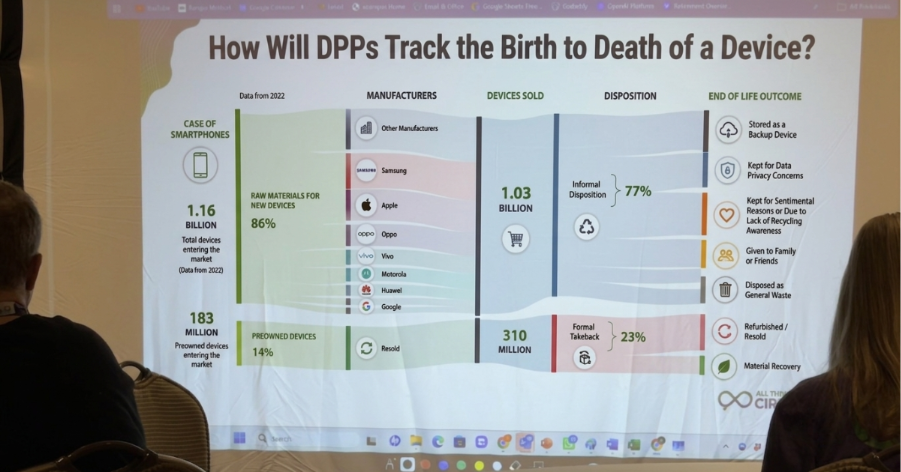
Following the discussion, representatives from OEMs, mobile network operators, and device lifecycle companies agreed that the industry is now actively working toward a unified Digital Product Passport (DPP) standard. Manufacturers, carriers, and recommerce platforms are aligning on a common framework that will enable trusted data sharing across the entire device lifecycle.
There was broad consensus that a Digital Product Passport should contain accurate, verifiable, and standardized information, including:
- Detailed battery health metrics
- Operating system activity and service logs
- Complete repair and maintenance history
- Results of certified hardware diagnostics and functional testing
Establishing a common DPP standard is expected to increase transparency, strengthen consumer trust, and create a more efficient and interoperable global secondary device ecosystem.
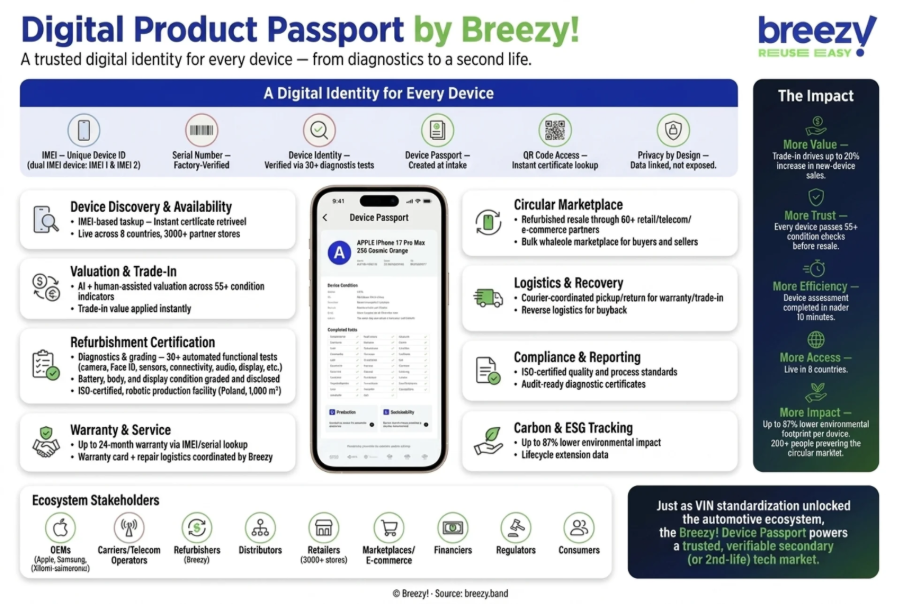
4. While the industry defines the standard, Breezy is already living it
While global industry leaders are still working to establish a common framework for Digital Product Passports, Breezy has been building this capability for years.
More than five years ago, we began making significant investments in our proprietary IT infrastructure to create a comprehensive digital record for every device we process. As a result, Breezy became one of the first companies in the recommerce industry to develop an ecosystem aligned with the core principles of the future Digital Product Passport.
Today, every device processed by Breezy is accompanied by a digital device passport that serves as a trusted source of verified information throughout its lifecycle. This approach has become a cornerstone of how we build trust with both our partners and end customers, ensuring complete transparency, consistent quality, and data-backed confidence in every device we bring back to market.
5. AI has moved beyond experimentation
One of the most insightful sessions at Mobile Disrupt 2026—Human-Led AI—wasn’t about futuristic concepts. Instead, the discussion focused on how AI is already transforming day-to-day business operations, from document processing and CRM to market research, customer support, analytics, and workflow automation.
Across the panel, one message stood out: AI should augment human expertise—not replace it. Artificial intelligence can accelerate decision-making and improve consistency, but human specialists remain responsible for oversight, judgment, and final decisions.
While many companies are still experimenting with AI, Breezy has already embedded AI into its core operations.
– AI powers our automated device diagnostics and delivers highly accurate, consistent grading.
– Our AI engine instantly estimates a device’s trade-in value from photos, enabling real-time online trade-in offers and instant discounts.
– This technology reduces valuation discrepancies for our retail partners to nearly zero while ensuring transparent and fair pricing for consumers.
6. Automation and robotics are driving industry standardization
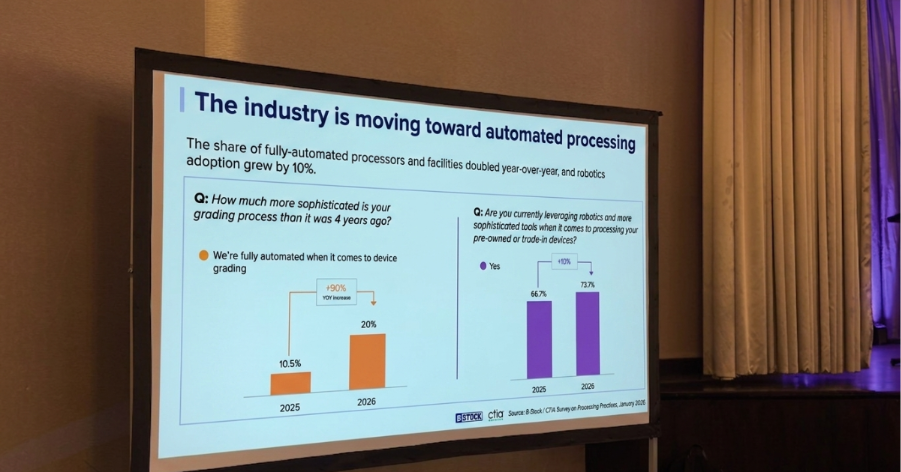
Another clear takeaway from the conference was the industry’s commitment to automation, robotics, and standardized device grading.
Across warehouses, refurbishment facilities, and recommerce platforms, companies are investing heavily in automated inspection and grading technologies to improve speed, accuracy, and consistency. At the same time, the industry is increasingly aligning around internationally recognized grading frameworks such as CTIA (including Versions 5.0 and 5.1), particularly in B2B trading and global marketplaces.
At Breezy, we strongly welcome this trend.
Standardization has always been one of our core principles. A truly mature secondary market depends on a common language of quality—one where a device labeled “Grade A” means exactly the same thing to buyers and sellers, regardless of country, marketplace, or refurbishment provider.
Creating that level of consistency will increase trust, simplify cross-border trade, and ultimately accelerate the growth of the global circular economy for consumer electronics.
7. Remarketing economics: a reality check from PhoneX
One of the conference’s most practical and thought-provoking sessions came from Nick Raman, Founder and CEO of PhoneX, who shared his perspective on the economics of operating in today’s increasingly mature recommerce market.
While recommerce is often perceived as a high-margin business, the reality is far more complex. As competition intensifies and margins continue to tighten, long-term success depends less on revenue growth and more on operational efficiency.
PhoneX highlighted a critical shift in mindset: the industry needs to move beyond chasing top-line revenue and focus instead on capital efficiency and disciplined risk management.
Key takeaways included:
Capital efficiency matters more than revenue.
A business with lower sales but faster inventory turnover and minimal working capital tied up in stock can generate significantly more long-term value than a larger competitor burdened by slow-moving inventory and high capital exposure.
Fixed costs are becoming a competitive risk.
In a market where prices and margins can fluctuate multiple times per year, companies with lean operating models and low fixed costs are far better positioned to adapt and remain profitable.
Measure profitability at every stage of the operation.
Procurement, diagnostics, repair, cosmetic refurbishment, and sales should each be evaluated as independent profit centers, with dedicated P&L visibility to identify inefficiencies and optimize margins.
The message was clear: in today’s recommerce market, sustainable success is driven by operational excellence, disciplined capital allocation, and the ability to execute efficiently—not by external market conditions alone.
8. New commerce models: the rise of live shopping
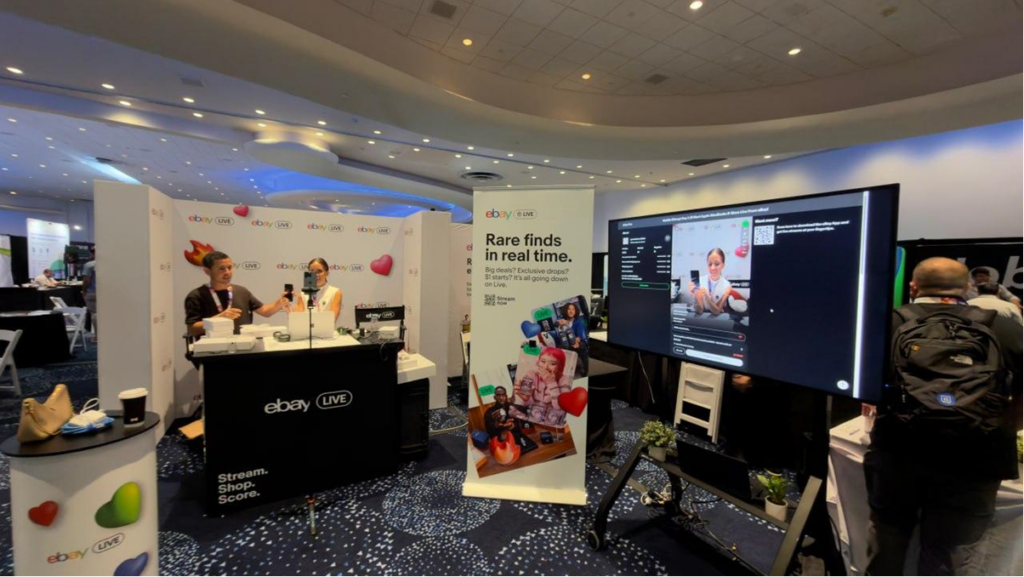
Consumer electronics retail continues to evolve, and one of the most interesting case studies presented at Mobile Disrupt 2026 was eBay Live Shopping.
Building on the success of livestream commerce in Asia, eBay has brought live shopping experiences to the consumer electronics category, allowing customers to watch real-time product demonstrations, interact with hosts, and purchase devices instantly during the broadcast.
The initiative reflects a broader industry shift toward interactive, content-driven commerce, particularly among younger consumers. Rather than simply browsing product listings, shoppers increasingly expect engaging experiences that combine entertainment, product education, and instant purchasing.
For the recommerce industry, this represents another step toward making refurbished devices not only trusted and affordable—but also more engaging and accessible to the next generation of buyers.
9. Enterprise device lifecycle management: the next major source of supply
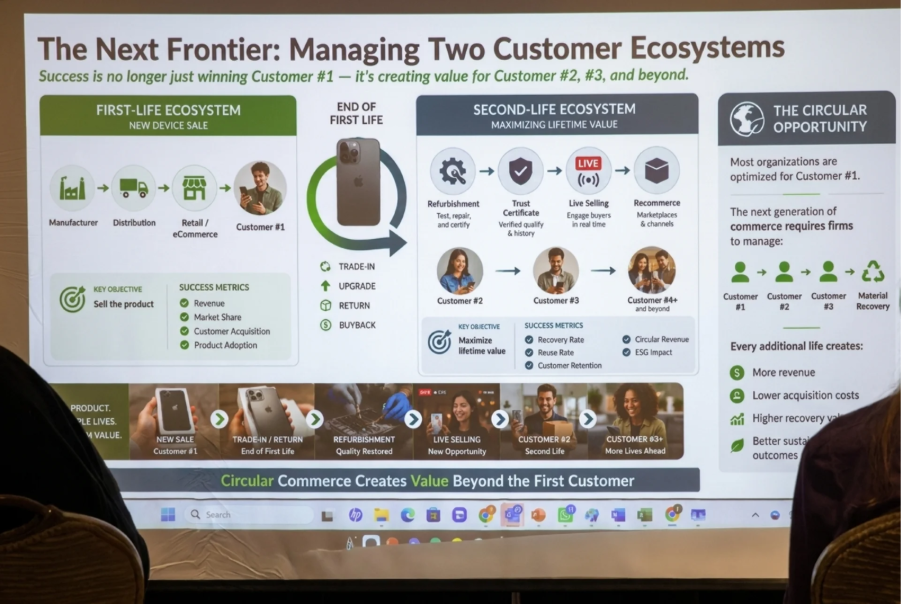
As consumer trade-in volumes tighten, the industry’s attention is shifting toward enterprise device lifecycle management as the next major growth opportunity.
The retirement of devices from large corporations, airlines, financial institutions, and government organizations represents a vast—and still largely untapped—source of high-quality smartphones, laptops, and tablets for the secondary market.
Several key themes emerged:
Secure data erasure is the biggest barrier.
The primary concern preventing organizations from remarketing retired devices is the risk of corporate data exposure. Companies that can provide certified, verifiable, and secure data wiping will be best positioned to capture this growing market.
A strategic sustainability opportunity.
Extending the lifecycle of millions of enterprise devices not only supports circular economy goals but also helps alleviate global shortages of semiconductors, rare earth materials, and memory components by keeping valuable hardware in circulation longer.
At Breezy, enterprise lifecycle management is already a strategic focus.
We help organizations of every size modernize their device fleets through a secure, end-to-end solution—from certified device decommissioning and data sanitization to professional grading, trade-in, refurbishment, and reintegration into the circular economy.
Looking ahead: what to expect in H2 2026
Looking toward the second half of 2026, speakers at Mobile Disrupt broadly agreed on two major market expectations.
1. Secondary market prices are expected to stabilize
After several years of significant price volatility, the consensus is that the secondary device market is entering a period of relative stability. Prices are expected to remain broadly at current levels, without major downward corrections.
2. The foldable iPhone could become the market’s biggest wild card
Perhaps the most intriguing prediction centered on Apple’s widely anticipated foldable iPhone.
If Apple introduces a foldable flagship, it could trigger the next major smartphone upgrade supercycle. Mobile carriers would likely respond by bringing back more aggressive multi-year upgrade programs, dramatically increasing trade-in volumes and injecting millions of previous-generation devices—starting with the iPhone 16 lineup—into the global secondary market.
For the recommerce industry, this could become the single biggest supply catalyst of the coming years.
What it means for the industry
Mobile Disrupt 2026 reinforced a clear direction for the global recommerce industry. Data transparency, Digital Product Passports, AI-powered automation, standardized grading frameworks such as CTIA, and the continued expansion of the circular economy are rapidly becoming the new industry standard—not future aspirations.
For Breezy, this validation is particularly meaningful because many of these capabilities are already embedded in our day-to-day operations. We continue to invest in advanced diagnostics, Digital Product Passport infrastructure, AI-driven grading, process automation, and standardized quality assessment because we believe these technologies are fundamental to building a more transparent, trusted, and scalable secondary device market.
Ultimately, innovation in recommerce isn’t just about processing more devices—it’s about creating greater confidence for every participant in the ecosystem. By making trade-in and refurbished devices more transparent, predictable, and accessible, we can deliver a better experience for retailers, mobile operators, enterprise partners, and, most importantly, consumers.
If Mobile Disrupt 2026 made one thing clear, it’s this: the future of the industry belongs to companies that combine technology, standardization, and trust. At Breezy, we’re proud to already be building that future today.

Why Industry 5.0 is the next stage of industrial era
We gathered for you major insights from the spring Plenary Session of the Industry 5.0 Community of Practice (CoP 5.0) of the European Commission’s Directorate-General for Research and Innovation held in Brussels. This invitation-only event served as a high-level strategic compass, bringing together policymakers, industry leaders, and academic experts to move Industry 5.0 from a…
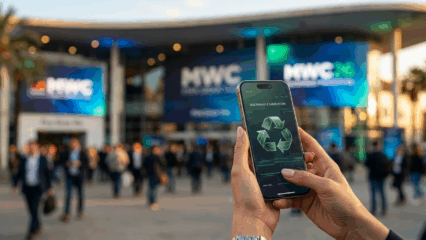
What will end the era of greenwashing in tech: insights from MWC 2026 Barcelona
Imagine this: a Fairphone can be disassembled with a screwdriver in minutes and used for 7 years, while Deutsche Telekom shuts down base stations for milliseconds at a time—resulting in lower connectivity costs for customers. The Breezy team, including CEO Andrii Kosar and Trade-in Product Manager Jan Mazur, has returned from MWC 2026 in Barcelona….

The global сircular economy roadmap: trends, barriers and the new “standard of frictionless trade”
The global secondary smartphone market has reached a critical turning point, evolving from a niche “green” initiative into a sophisticated financial instrument for digital affordability. These shifts were the focal point of the Circular Market 2026 conference in London, where industry leaders shared their observations and strategic insights. As noted by Breezy CEO Andrii Kosar…
 International
  Ukraine
  Poland
  Georgia
  Kazakhstan
  Cyprus
  Azerbaijan
  Moldova