

What will end the era of greenwashing in tech: insights from MWC 2026 Barcelona
Imagine this: a Fairphone can be disassembled with a screwdriver in minutes and used for 7 years, while Deutsche Telekom shuts down base stations for milliseconds at a time—resulting in lower connectivity costs for customers. The Breezy team, including CEO Andrii Kosar and Trade-in Product Manager Jan Mazur, has returned from MWC 2026 in Barcelona….
Imagine this: a Fairphone can be disassembled with a screwdriver in minutes and used for 7 years, while Deutsche Telekom shuts down base stations for milliseconds at a time—resulting in lower connectivity costs for customers.
The Breezy team, including CEO Andrii Kosar and Trade-in Product Manager Jan Mazur, has returned from MWC 2026 in Barcelona.
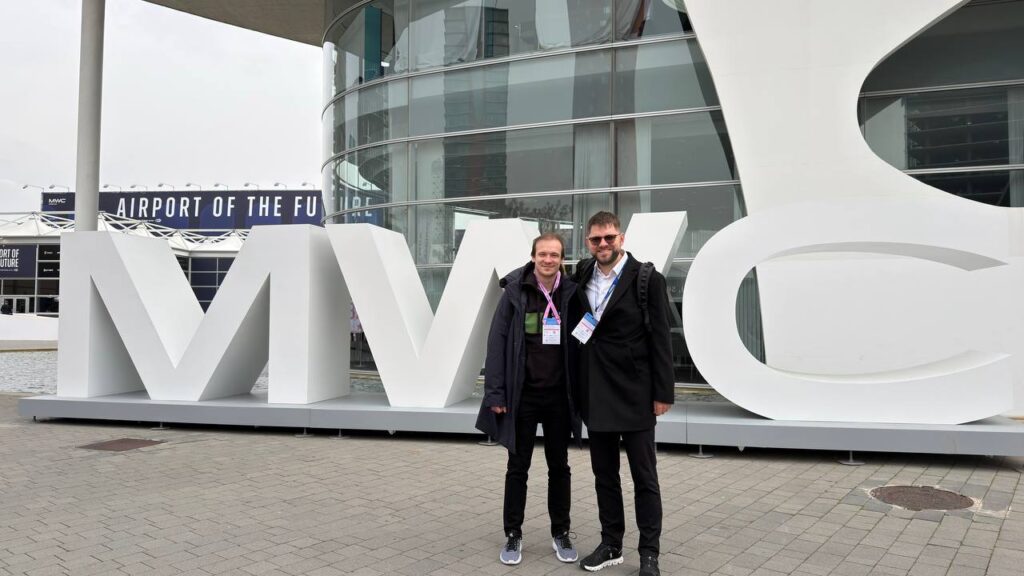
The main takeaway from market leaders (including Samsung, Orange, and Vodafone) is clear: the era of “green slogans” is over.
The industry is moving toward tangible engineering solutions: modularity, AI-driven energy efficiency, and full accountability for emissions. This shift isn’t just changing the planet; it’s changing the user’s wallet.
This year’s Congress proved that sustainability has evolved from a marketing add-on into a core business logic. For Breezy, this means the market is finally ready for the large-scale implementation of circular models, where every gadget gets a second or third life

TOP 3 sustainability trends every user should know
At the Congress, three levels of responsibility were highlighted, already being implemented Samsung, Xiaomi, HONOR, Vodafone, Orange, and other industry giants:
1. Circular battery supply chain: the battery as an infinite resource
Our partner Samsung demonstrated a shift from the “extract-and-discard” model to a closed-loop cycle. As part of the Galaxy for the Planet program, the Galaxy S26 series utilizes recycled ocean-bound plastic and cobalt recovered from used batteries.
“Black Mass” technology allows for the extraction of up to 95% of pure metals (cobalt, lithium, nickel) from end-of-life devices, including trade-ins and production scrap. This reduces the carbon footprint of each battery by 20–30% and helps stabilize prices despite raw material shortages. Fairphone and Nokia (HMD) complemented this trend with modular designs for home repair, extending device lifespans to 5–7 years.
2. AI-driven energy management: smart savings in networks
Infrastructure leaders and operators (including our partners Vodafone and Orange) introduced the “Zero Bit – Zero Watt” concept. AI analyzes traffic in real-time, shutting down unused frequencies or antennas for mere milliseconds based on predicted load.
Cellnex showcased autonomous solar-powered base stations, while Qualcomm, NVIDIA, and Intel focused on chipsets emphasizing “performance per watt.” This optimization helps operators save up to 30% on energy (and up to 65% in the core network), which helps stabilize subscription rates for users.
3. Collective responsibility for Scope 3
Much of the discussion at MWC focused on “Scope 3”—indirect emissions across the entire chain: from the sustainability of supplier factories to the energy used to charge your smartphone at home.
Qualcomm is taking responsibility for logistics and supplier raw materials. Consequently, 7–8 years of software support (standardized by Google and Samsung) is becoming the norm: longer usage equals lower emissions. This also leads to minimal packaging, the removal of “extra” accessories, and new monetization models.
Our goal at Breezy is to make the exchange and upgrade process so seamless that users choose sustainable consumption simply because it is more convenient and cost-effective

How will this affect your wallet?
We have summarized expert forecasts from MWC in this table. While sustainability requires investment, it pays off for the consumer in the long run:
| Parameter | Impact on price | Why? (Based on congress data) |
| New flagship price | 5–10% Increase | Higher component costs and eco-certification; however, recycling mitigates raw material shortages. |
| Annual cost of ownership | 15% Decrease | Longer lifespan (modularity, 7+ years of updates), higher resale value for Trade-in, and subscription models ($30/month vs $1200 upfront). |
| Connectivity rates | Stability + Flexibility | AI energy savings offset inflation; value-based pricing (e.g., $1 turbo-boost), and eco-tariffs with bonuses for off-peak usage. |
| Additional services | New Monetization | Paid AI updates after 5 years, compact packaging/fewer accessories to reduce Scope 3 emissions. |
Why Breezy values these insights
MWC 2026 confirms that Breezy’s path is the right one. We help our partners’ devices (Samsung, Xiaomi, HONOR, and others) live longer through professional refurbishment and Trade-in programs.
Together with our partners, we are making cutting-edge technology accessible to everyone while optimizing processes for the future of our planet.
Curious how many resources your device can save? Check the estimated value of your gadget through Trade-in programs at Breezy’s partner locations. Join the global circular movement today!
9 insights from mobile disrupt 2026: where the global trade-in and refurbished device market is heading
Every year, Mobile Disrupt brings together the world’s leading smartphone manufacturers, mobile network operators, trade-in providers, refurbishment specialists, and reverse logistics companies. As one of the industry’s premier global events, it sets the agenda for the future of device circularity and helps shape the standards that define the recommerce ecosystem. This year’s conference made one thing clear:…
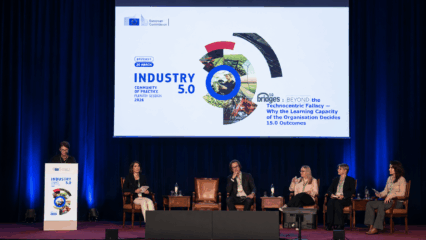
Why Industry 5.0 is the next stage of industrial era
We gathered for you major insights from the spring Plenary Session of the Industry 5.0 Community of Practice (CoP 5.0) of the European Commission’s Directorate-General for Research and Innovation held in Brussels. This invitation-only event served as a high-level strategic compass, bringing together policymakers, industry leaders, and academic experts to move Industry 5.0 from a…

The global сircular economy roadmap: trends, barriers and the new “standard of frictionless trade”
The global secondary smartphone market has reached a critical turning point, evolving from a niche “green” initiative into a sophisticated financial instrument for digital affordability. These shifts were the focal point of the Circular Market 2026 conference in London, where industry leaders shared their observations and strategic insights. As noted by Breezy CEO Andrii Kosar…
 International
  Ukraine
  Poland
  Georgia
  Kazakhstan
  Cyprus
  Azerbaijan
  Moldova